
Steve Agisnaga, Vice President of Global Operations at Evac + Chair North America LLC explains how to build confidence in the face of an emergency and the value of in-person training
Confidence doesn’t just come from reading a manual. It comes from repeated, hands-on experience. This is why every Evac+Chair product comes with user guides and is designed to be intuitive upon application.
However, as with most safety devices, assuming the product is easy to use can lead to a dangerous sense of complacency in emergencies, when seconds count, relying on instinct alone may not be enough.
While regular fire drills or CPR training is commonplace, evacuation chair training is not, even though it plays a similarly life-saving role.
One of the most dangerous assumptions we see, is that evacuation chairs are “easy enough to figure out on the day.”
“People and organizations must make sure they purchase the right evacuation chair tailored to their needs, yet the designated operators often lack confidence in using the chair during a real emergency.” stated Steve Agisnaga.
This is why training is essential.
The role of muscle memory in emergency response
When using an evacuation chair, building muscle memory is vital.
“Practicing regularly helps the operator become familiar with the deployment, navigation and stabilization of the chair.” Steve continued to say.
This muscle memory not only enhances the efficiency and safety of the evacuation process but also reassures the passenger, who may already be frightened or anxious during an emergency. The last thing a passenger wants to experience is hesitation or confusion from the person entrusted with getting them to safety. The presence of uncertainty; whether in the form of miscommunication, awkward handling or fumbling with the chair can significantly increase stress levels. This, in turn, can compromise the overall safety of the situation. Training about more than just technical proficiency, it is about instilling confidence and trust in both the operator and the passenger.
Hands-on training makes the difference
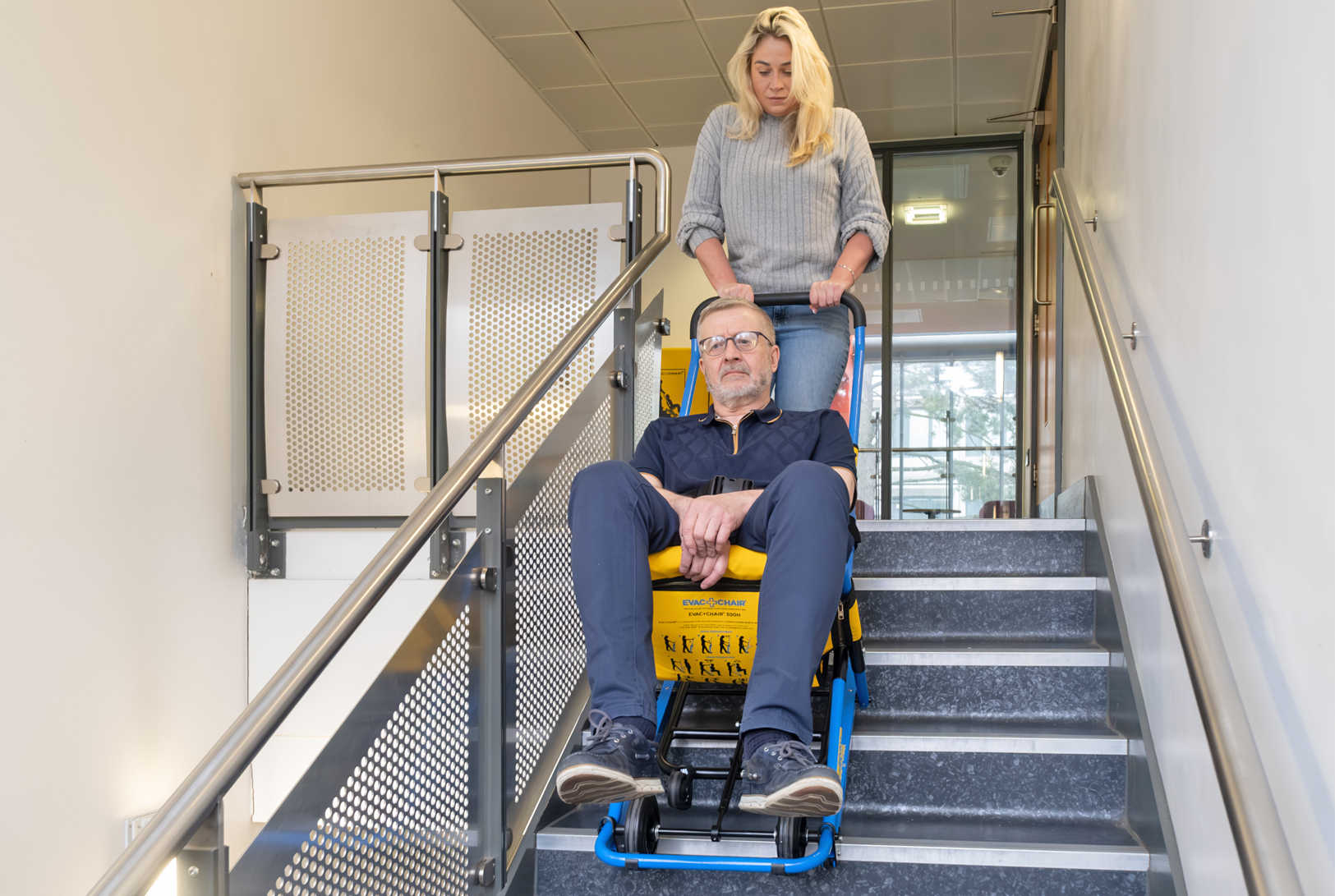
“We recommend that customers take the time to get hands-on with the chair, starting with the basics such as opening and closing the chair and practicing deployment without a passenger to focus on proper technique. Training is a step-by-step process.”
Steve added “As the operator becomes more confident, training should progress to handling increased weight such as by using a mannequin.”
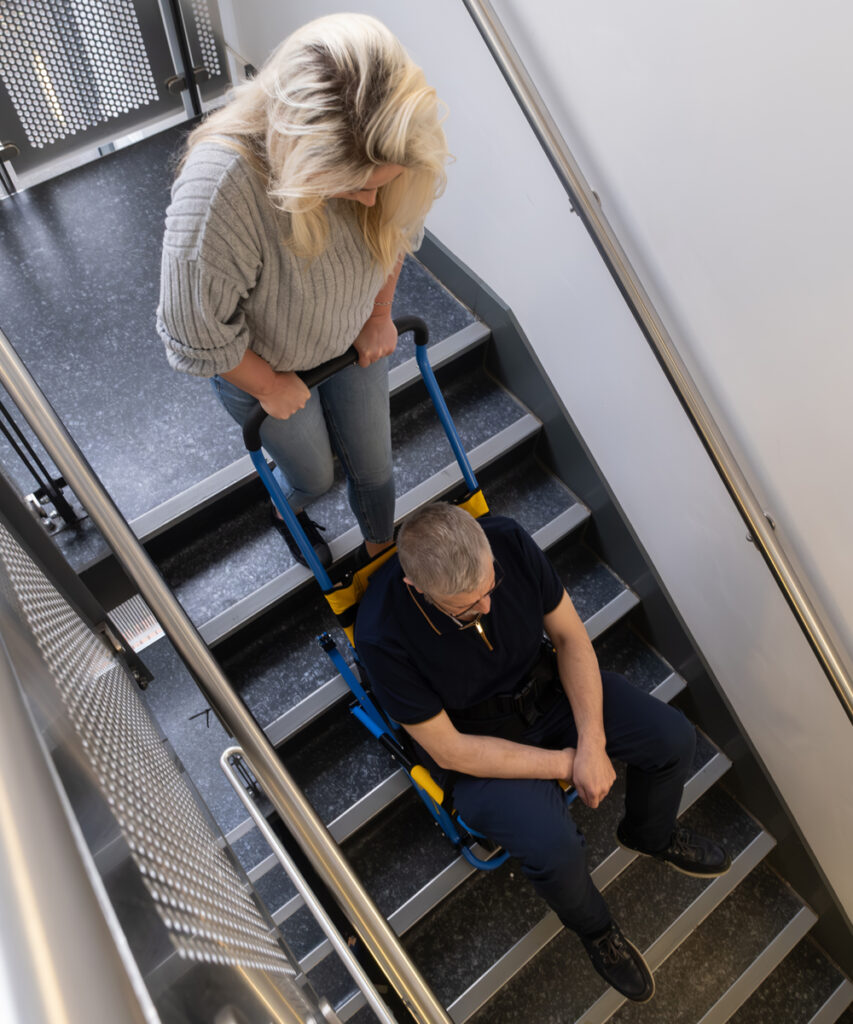
The end result typically finishes by handling a real person in a controlled environment. The value of in-person training lies in real-time feedback. Mistakes or poor technique can be corrected immediately in-person, helping to reduce the likelihood of error during a real emergency. Moreover, in-person training helps operators learn to navigate real-life building layouts, including tight stairwells, sharp corners or unexpected obstacles. Another thing to note is that it is also important to train multiple team members because emergencies can strike at any time. If the designated operator is not present, then this can be disastrous. Broadening the pool of trained individuals ensures there’s always someone available and ready to respond quickly and efficiently. Highlighting chair locations to not just designated ‘users’ but all occupants as a whole help drive awareness.
Addressing common misconceptions
“One of the most dangerous assumptions we see, is that evacuation chairs are ‘easy enough to figure out on the day.’ But the truth is, emergency situations rarely allow for the luxury of trial and error.” said Steve
The pressure of an alarm, the urgency of smoke or the confusion of crowded stairwells can overwhelm even the calmest individual. Another misconception is that evacuation chairs are only necessary for permanent wheelchair users. In reality, many people may find themselves with reduced mobility during an emergency, whether due to injury, illness, pregnancy or panic. This makes it even more crucial for organizations to integrate evacuation chair training into their broader emergency preparedness programs.
Compliance and legal considerations
In many jurisdictions, building managers and employers have a legal obligation to provide safe egress for all occupants, including those with disabilities. Failing to train staff in the use of evacuation chairs could expose organizations to legal liability in the event of an incident. Regulatory bodies increasingly recognize the importance of inclusive evacuation planning. Training not only ensures compliance with health and safety legislation but also demonstrates a genuine commitment to accessibility and duty of care.
Conclusion: Training saves lives
An evacuation chair can be one of the most valuable safety tools in any multi-story- but only if it is used correctly. Without adequate training, even the best tools can fall short in a crisis. Whether you’re a building safety manager, safety office or employer, now is the time to ask yourself and your team: “are we truly prepared?”.
Steve concluded by saying “Training is intrinsic to the Evac+Chair team and we know firsthand that it should never be overlooked.”
It’s not just about moving a chair down a flight of saves, but it’s about saving lives and doing this safely, swiftly and confidently. We urge you to ask if evacuation chair training is a regular part of your emergency preparedness plan?